top of page
Paintings and Portraits
Forgotten artists, expressive faces, quiet interiors, and landscapes that transport us somewhere else.
At Casa Violeta, we are drawn to paintings with character, history, and a little mystery. A portrait whose face tells a story. A still life celebrating the beauty of ordinary things. A painting by an overlooked artist whose work deserves to be discovered again.
We love faded colors, imperfect surfaces, expressive brushstrokes, and the unmistakable evidence of time.
Whether displayed in an ornate gilded frame or leaning casually against a wall, we believe old art belongs in modern life.
Not necessarily famous. Not always perfect. Simply beautiful, intriguing, and worth another look.
Project type
Interior Styling & Vintage Curating
Date
September, 2026
Location
San Miguel de Allende

01
Paintings and Portraits

01
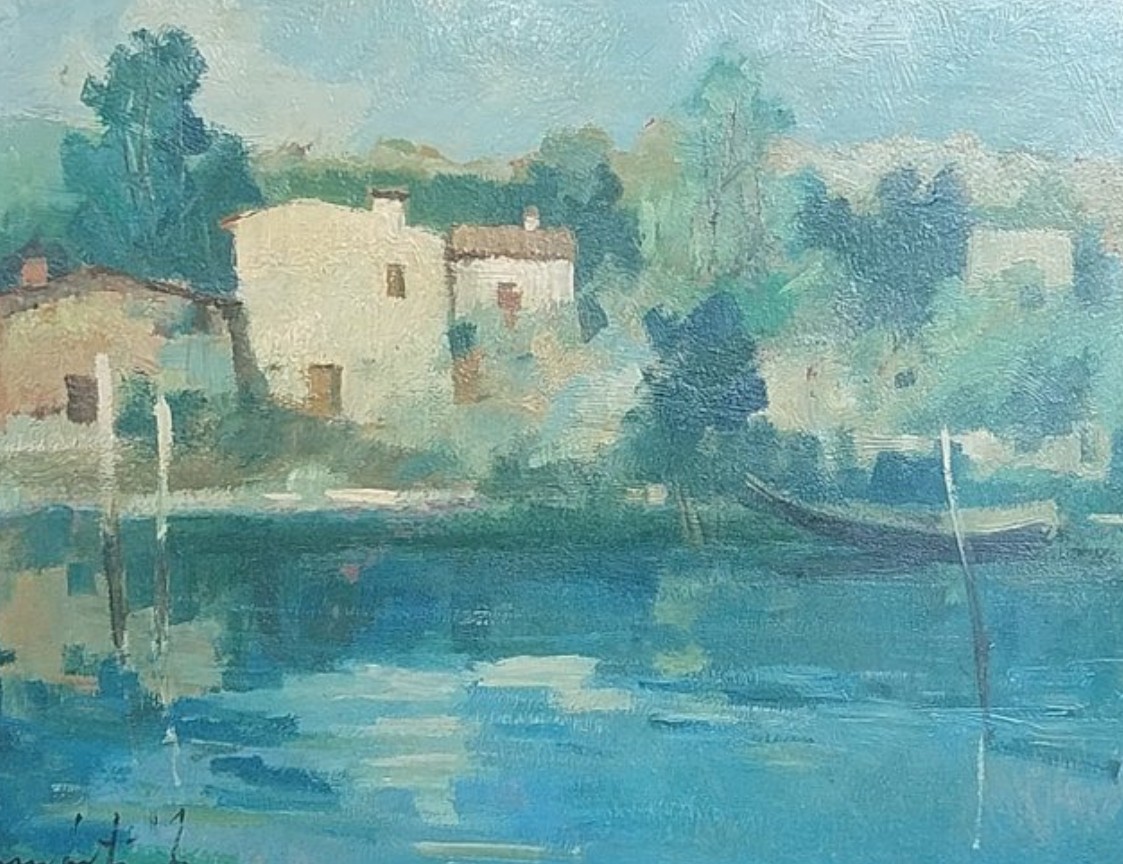
Quiet Morning on the Water: Mid-Century Lombardy & The Poetic Realism of Lamberto Lamberti
Title: Laguna (Waterfront Cottages)
Artist: Lamberto Lamberti (Italian, 1925–2003)
Date: Circa 1960–1970
Medium: Oil on masonite
Dimensions: 60 × 80 cm (23.6 × 31.5 in) unframed | 72 × 92 cm (28.3 × 36.2 in) framed
Signature: Signed lower left and inscribed on the reverse
The Story Behind the Canvas
Step into the hushed, misty calm of mid-century Northern Italy. Painted during the 1960s by Brescia-born artist Lamberto Lamberti, this atmospheric waterfront landscape captures a vanishing way of life along the historic waterways and pre-Alpine lakes of Lombardy.
In the decades immediately following World War II, Italy entered its Miracolo Economico (Economic Miracle)—a period of rapid industrialization that transformed cities like Milan and Brescia into bustling manufacturing hubs. Yet just beyond the factory towns lay the quiet shores of Lake Iseo, Lake Garda, and the misty channels of the Venetian Lagoon, where fishermen, boatbuilders, and rural families still lived according to the slow rhythms of the water.
In Laguna, Lamberti turns his back on the noise of modernizing Italy to preserve the enduring poetry of those modest waterfront dwellings. Simple plaster-walled cottages with terracotta roofs sit nestled into soft, silvery-green foliage, their warm ochre and cream facades mirrored in the still, cerulean water below. Tall wooden mooring poles (briccole) rise gently from the shallows beside a traditional flat-bottomed wooden skiff, suggesting a quiet morning before the day’s work begins.
Artistic Lineage & Lombard Light
Lamberti’s sensitive handling of light and atmosphere reflects a rich Northern Italian artistic lineage. Born in Brescia in 1925, he trained under two of the region's most respected masters: Angelo Landi (1879–1944), celebrated for his luminous frescoes along Lake Garda, and Emilio Pasini (1872–1953), a virtuoso portraitist and teacher at Brescia’s historic Scuola Moretto.
After winning recognition at the Premio del Paesaggio Bresciano in 1954 and moving to Milan, Lamberti developed a signature poetic realism influenced by the Lombard Chiarismo movement and Paul Cézanne’s structural approach to color. Italian critics of his era praised his unmistakable vision of "old and humble houses under skies of a dense and veiled azure"—a lyrical approach where water, sky, and weathered stone dissolve into harmonious brushstrokes of cool blue, sage, and soft sunlit ivory.
Why We Love It for Your Home
• Restorative Palette: The soothing interplay of misty blues, celadon greens, and warm sun-washed plaster brings immediate tranquility to a bedroom, study, or dining space.
• Authentic Mid-Century Texture: Painted on rigid masonite—a favored support among postwar European plein-air painters—the surface retains rich, tactile impasto brushstrokes in the sky and water reflections.
• Ready to Hang: Presented in its vintage gilt-trimmed frame, offering a timeless European heirloom presence straight out of the box.

02
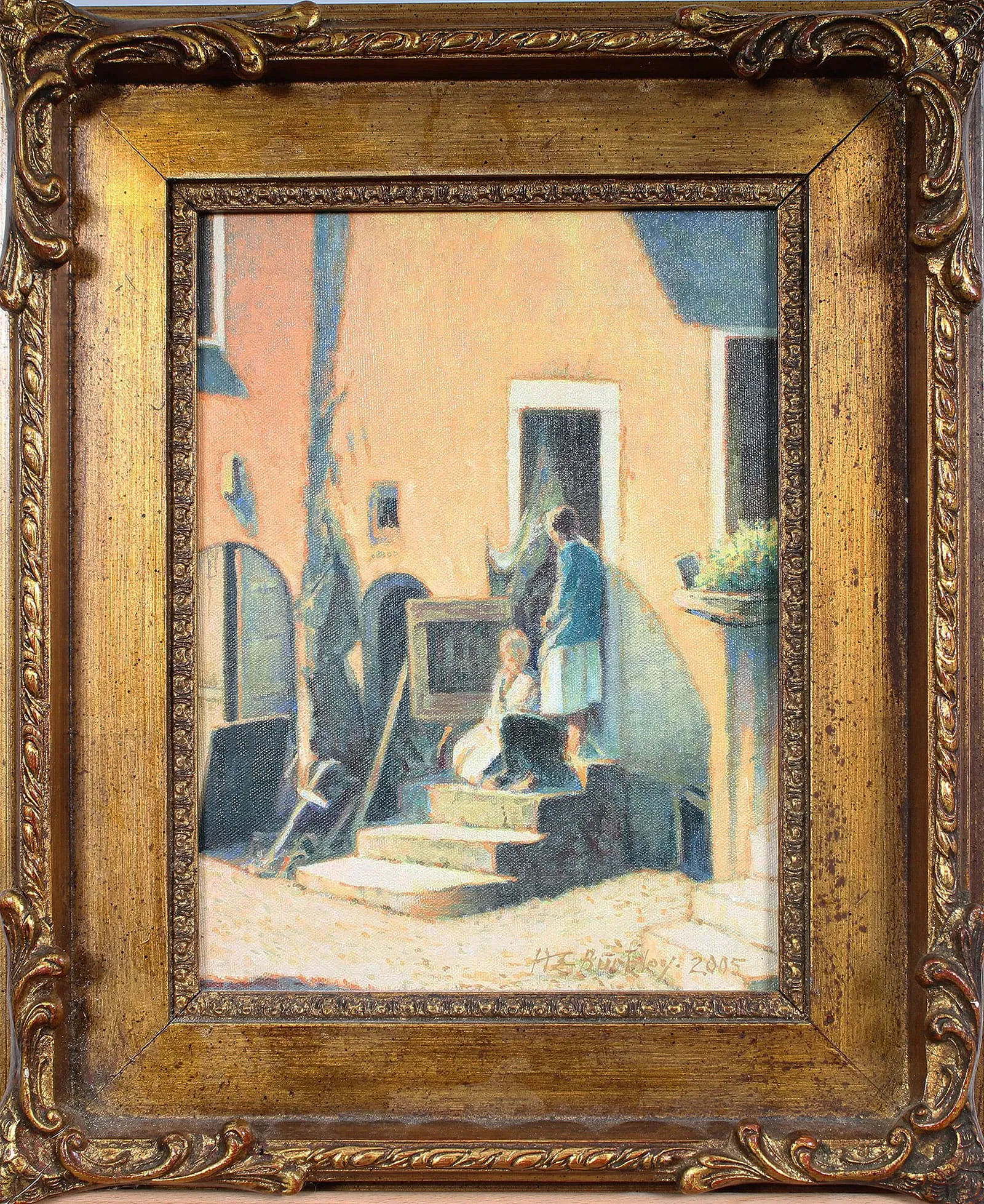
A Quiet Moment in the Courtyard
**Harry E. Buckley (1930–2010) | American Artist | 2005**
A beautifully intimate courtyard scene by American painter Harry E. Buckley, capturing a fleeting moment of everyday life beneath the warm light of a Mediterranean afternoon.
Two figures linger on the worn stone steps of a sun-washed building, framed by an open doorway, weathered walls, and deep architectural shadows. Soft peach, ochre, and terracotta tones mingle with delicate blues and greens, creating a wonderful interplay of warmth and coolness.
Buckley's expressive brushwork and atmospheric use of color transform an ordinary encounter into something quietly compelling. The scene invites us to imagine the conversation taking place, the lives unfolding behind the doorway, and the generations who have walked those same steps.
**About the Artist**
Born in Arkansas in 1930, Harry E. Buckley was an American painter, educator, and lifelong student of art.
He earned degrees from the University of Arkansas and a doctorate in art history from the University of Iowa. Throughout his career, he taught at several institutions, including Temple University and Carleton College, while continuing to develop his own artistic practice.
An enthusiastic traveler, Buckley found particular inspiration in Europe, where the architecture, landscapes, waterways, and rhythms of everyday life became recurring subjects in his paintings.
Although Philadelphia remained his home for much of his life, his artistic imagination traveled far beyond it. His work found its way into hundreds of private collections throughout the United States and Europe.
Signed and dated 2005, this charming painting is presented in an ornate, richly gilded frame that complements its warm palette and old-world atmosphere.
At Casa Violeta, we are especially drawn to paintings like this—works that celebrate the beauty of ordinary moments and invite us to wonder about the people who came before us.
5 by 18 inches overall.
**A quiet scene, a fleeting encounter, and a story left for us to imagine.**

03
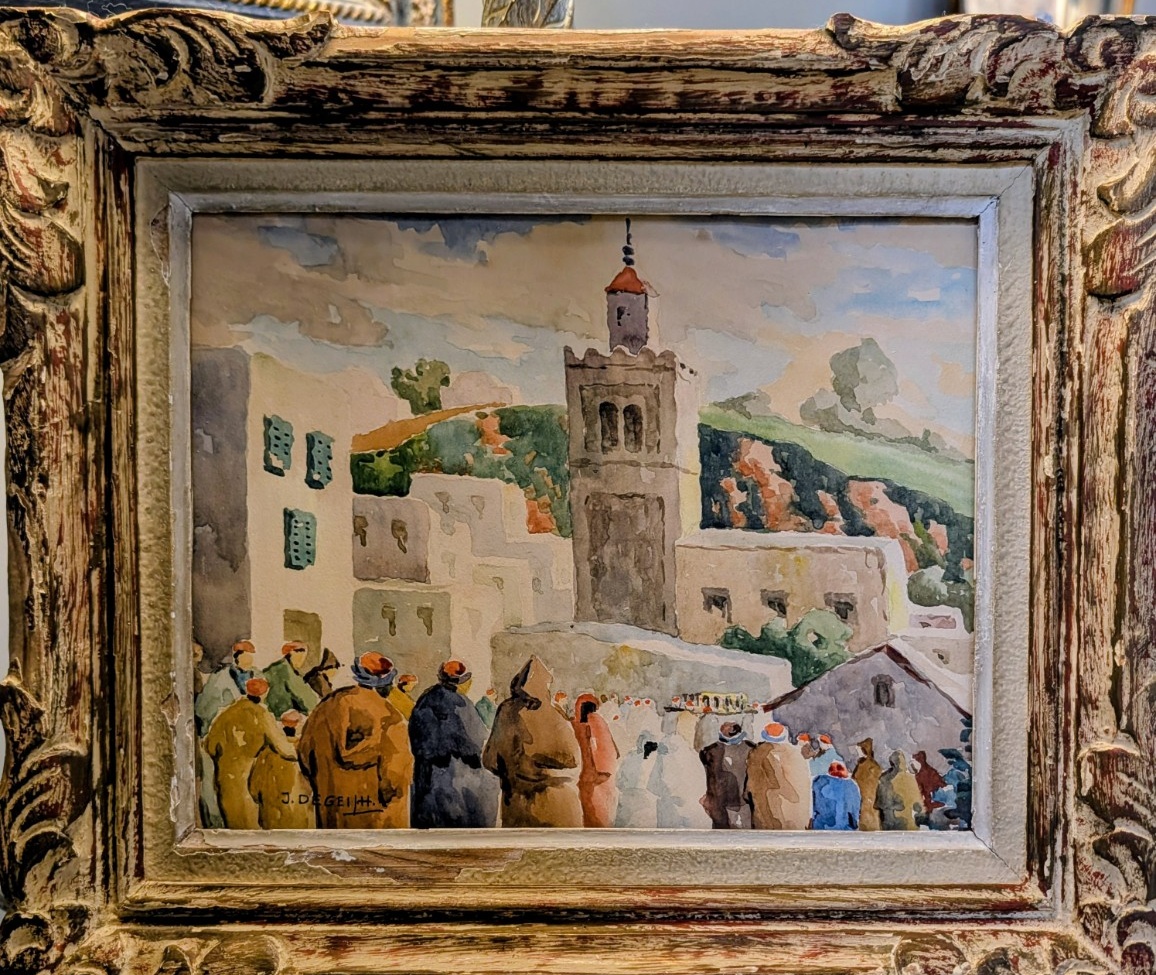
Funeral Procession in Tunisia, Jean Degeilh
A poignant glimpse of community, ritual, and everyday life in Tunisia.
Signed by French artist Jean Degeilh, who lived and painted in Tunisia during the 20th century, this evocative work depicts what is understood to be a funeral procession winding through a North African town.
Figures dressed in muted ochres, blues, and earth tones gather beneath a towering minaret, while sun-washed buildings and green hills provide a quiet backdrop.
With loose, expressive brushwork and a beautifully restrained palette, Degeilh captures more than a moment in time. The scene speaks to the shared rituals that bind communities together—remembrance, tradition, and the passing of generations.
Presented in an ornate, timeworn gilded frame, the painting brings together history, humanity, and the beauty of ordinary life.
A small painting with a much larger story.

04
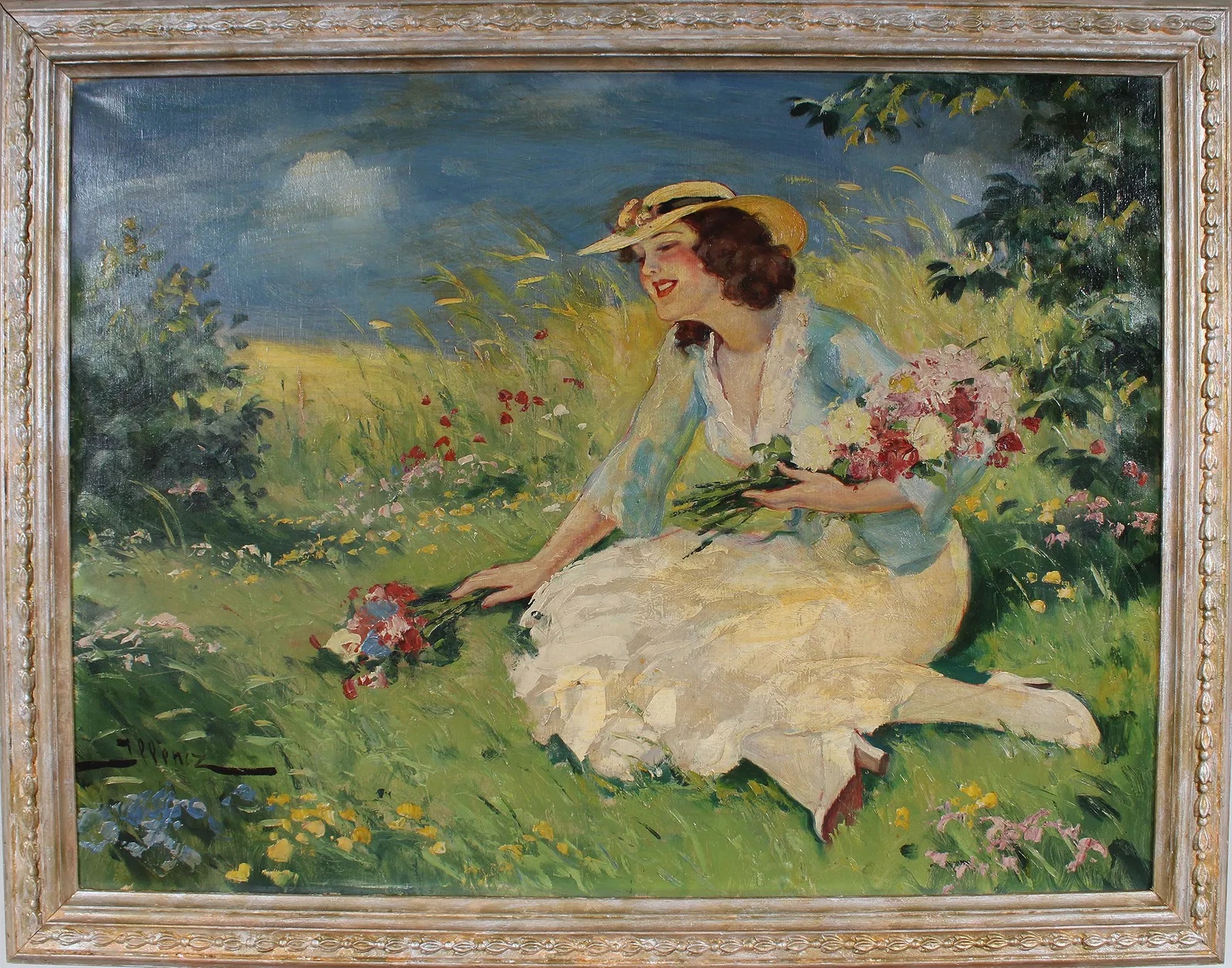
A Summer Afternoon
Lipót Illencz (1882–1950) | Hungarian Impressionist Painter
A beautifully expressive oil painting by Hungarian artist Lipót Illencz, depicting a young woman gathering wildflowers in a sunlit meadow.
Dressed in a flowing white skirt, pale blue blouse, and straw hat, the woman pauses among the grasses, holding a generous bouquet of pink blossoms. Around her, wildflowers scatter across the meadow in delicate strokes of lavender, crimson, yellow, and blue.
Illencz's lively brushwork and rich color capture the warmth and spontaneity of an idyllic summer afternoon. The woman's relaxed posture and gentle smile give the composition an intimate, almost cinematic quality—a fleeting moment of pleasure preserved in paint.
About the Artist
Born in Újarad, Hungary, in 1882, Lipót Illencz studied painting in Munich with prominent artists Simon Hollósy, Anton Ažbe, and Heinrich Heidner. His talent was recognized early, and he began exhibiting at Budapest's prestigious National Salon in 1902.
Illencz became known for his portraits, figurative compositions, and scenes of leisure, particularly women enjoying gardens, flowers, and the countryside. His paintings combine accomplished figurative drawing with the expressive color and atmosphere of late Impressionism.
His work remains represented in European galleries and auction records, offering collectors an opportunity to discover an accomplished artist whose name deserves wider recognition.
Presented in a softly gilded, delicately ornamented frame, A Summer Afternoon embodies the Casa Violeta philosophy: beautiful art with history, personality, and a story worth sharing.
A little piece of summer, preserved for generations.

05
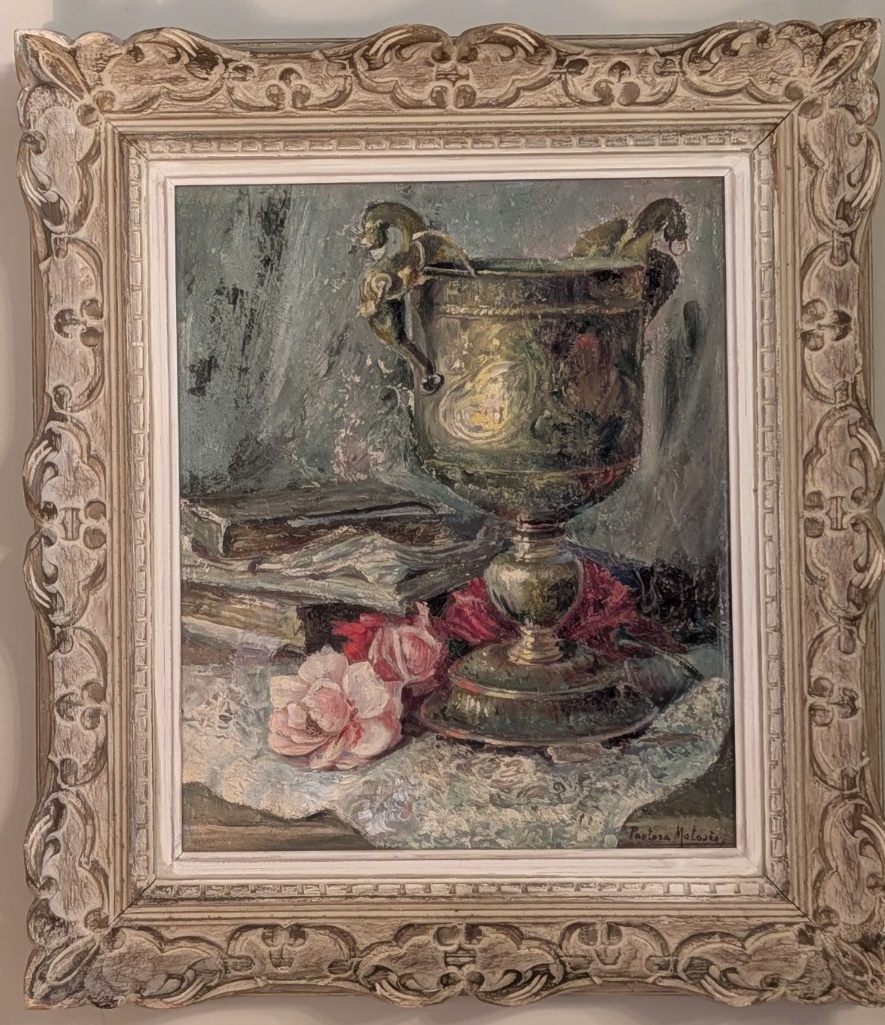
Roses & the Gilded Urn
Pastora Matoses (1892–1952) | French Artist
An intimate still life by French painter Pastora Matoses, featuring an ornate antique urn surrounded by softly fading pink roses, aged books, and richly textured fabric.
Against a muted blue-gray background, the burnished gold of the urn catches the light, while loose, expressive brushstrokes bring warmth and movement to the quiet composition. The contrast between delicate flowers, worn books, and enduring metal captures the beauty of objects that have lived, been treasured, and passed through time.
The artist behind the painting is equally compelling.
Born in Paris in 1892 to two accomplished painters, Manuel Matoses and Marie Marguerite Matoses-Dumas, Pastora grew up surrounded by art. She developed her own distinguished career as a painter of still lifes, flowers, portraits, and miniatures, exhibiting at the prestigious Salon des Artistes Français in Paris.
Beyond her painting, Pastora was a teacher and an influential figure in the cultural life of Angoulême, France. She founded a women's cultural circle and helped organize the city's artistic salon, creating opportunities for artists and encouraging women's participation in the arts.
When she died in 1952, her community gathered to honor her life and work. Her paintings were displayed among the flowers at her memorial—a particularly fitting tribute to an artist celebrated for her extraordinary talent in painting flowers.
Today, her work offers an opportunity to rediscover a talented woman whose artistic contributions deserve to be remembered.
Presented in an ornate, softly aged frame, Roses & the Gilded Urn is a beautiful example of her sensitivity to color, texture, and the poetry of everyday objects.
A painting to live with. An artist worth remembering.

06
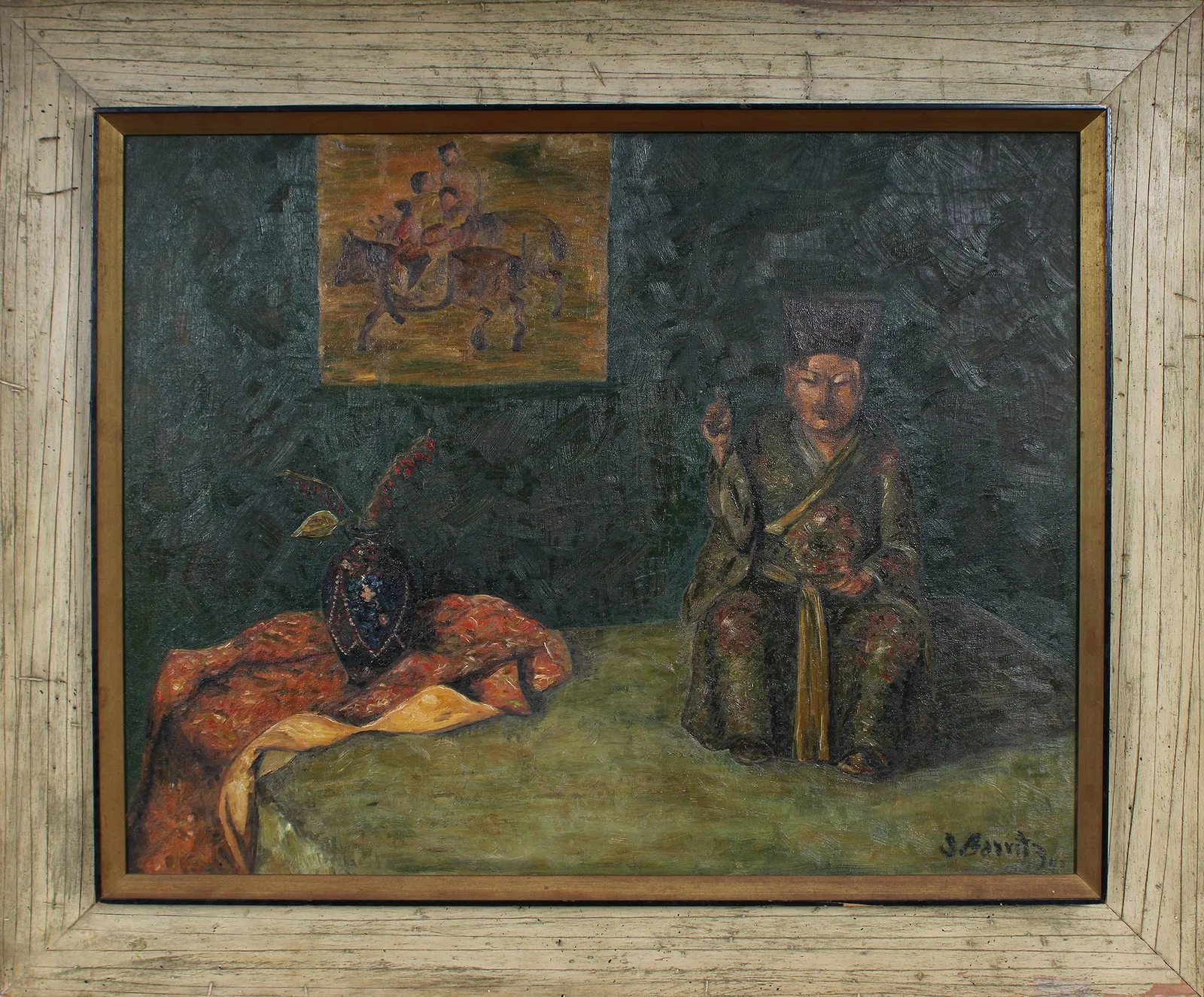
The Quiet Collector
J. Garrit | American School | Signed and Dated 1947
Vintage Orientalist-Style Oil Painting | 32 × 38 Inches Framed
A richly atmospheric American oil painting from 1947, reflecting the fascination with Asian art and culture that influenced a generation of American artists during the early to mid-20th century.
The composition centers on a seated Asian figure in traditional dress, rendered in subdued olive greens, earthy reds, and golden ochres against a deeply textured charcoal background. To one side, an arrangement of patterned textiles and a decorative vase introduces layers of color and texture, while a small painting depicting figures on horseback hangs above.
The restrained palette, deliberately arranged objects, and contemplative atmosphere recall the Orientalist paintings popularized by Armenian-American artist Hovsep Pushman (1877–1966), whose work celebrated the symbolism, mystery, and aesthetic traditions of Asian antiquities.
An American Fascination with the East
During the 1920s through the 1940s, American galleries and collectors developed a strong appreciation for paintings inspired by Asian art, decorative objects, and cultural imagery.
Pushman became one of the best-known artists working in this tradition. His paintings, frequently featuring Asian figurines, richly patterned fabrics, and carefully composed still lifes, were celebrated for their dramatic lighting, jewel-like colors, and contemplative mood.
Painted in 1947, J. Garrit's composition belongs to this broader period of artistic fascination. Rather than emphasizing elaborate detail, the artist uses broad, visible brushstrokes and a muted palette to create a quiet, almost theatrical atmosphere.
The painting also reflects the conventions of historical Orientalism, when Western artists frequently presented Asian subjects through romanticized and sometimes imagined interpretations of cultures different from their own.
A Statement Piece
Measuring an impressive 32 × 38 inches overall, this is a substantial, gallery-scale painting with remarkable decorative presence.
Its generous proportions, softly aged painted frame, and sophisticated palette make it particularly striking in an interior that mixes vintage art with contemporary furnishings.
Signed J. Garrit and dated 1947, the painting offers a fascinating glimpse into mid-century American artistic taste and the enduring appeal of richly atmospheric figurative painting.
An intriguing intersection of art, history, and the American imagination.

07
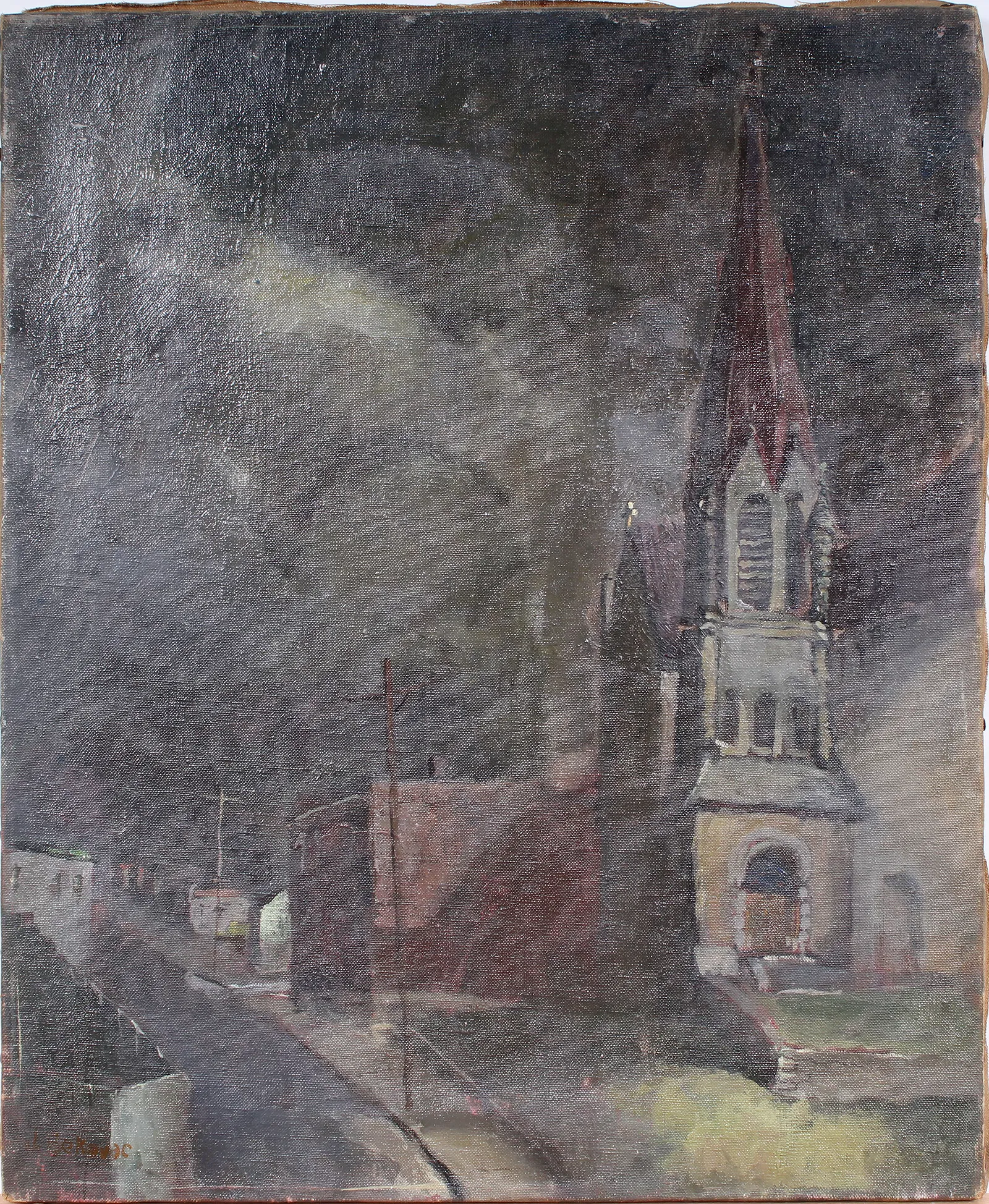
Two Sides of a Story
J. Dekovac | Mid-20th Century | Double-Sided Oil on Canvas
A Gothic church beneath a storm-darkened sky. A woman in magenta, her face marked by experience and quiet resolve. Two completely different subjects, painted on opposite sides of the same canvas.
On the front, a towering church spire rises above a deserted street, its architecture emerging from layers of charcoal, smoky violet, and muted gray. Turn the painting over, and an expressive portrait reveals a woman with flushed cheeks, dark hair, and an arresting, contemplative gaze.
Together, these two paintings offer an unexpected glimpse into an artist's imagination—and the wonderful mystery of a canvas that holds more than one story.

08
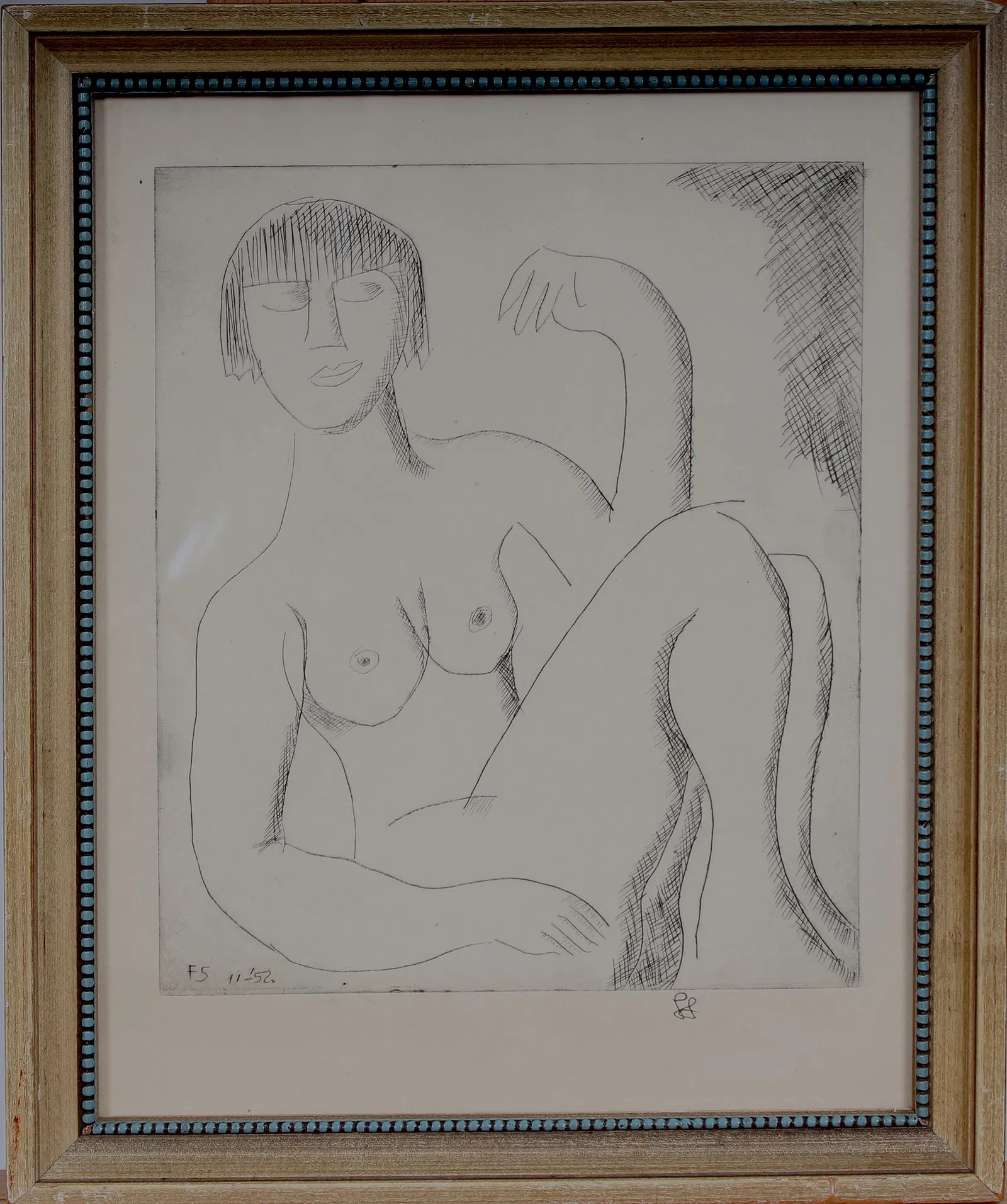
Reclining Woman, 1952
Mid-Century Modern Figurative Print | Signed F.S. and Dated November 1952
Vintage Framed Print | 10.5 × 9 Inches Overall
A beautifully understated mid-century figurative work capturing the elegance of the human form through a remarkable economy of line.
A reclining woman with a short, geometric bob rests with her eyes gently closed, one arm raised and her legs folded into a graceful composition. Delicate crosshatching introduces shadow and dimension, while confident, flowing contours give the figure an appealing sense of ease and quiet sensuality.
The Art of Simplicity
Created in 1952, this work reflects the modernist fascination with reducing the human figure to its essential shapes and gestures.
Its stylized proportions, simplified facial features, and expressive linework recall the artistic language of European modernists such as Henri Matisse, Pablo Picasso, and Amedeo Modigliani, whose explorations of the female form transformed figurative art in the 20th century.
Rather than striving for photographic realism, the artist captures personality, movement, and mood through a handful of carefully placed lines.
Signed with the initials F.S. and dated November 1952, the print preserves the intimate quality of an artist's drawing.
A Modern Counterpoint
Presented in a softly weathered wooden frame with an unexpected turquoise beaded inner border, this small work has a quiet sophistication that belies its modest dimensions.
It feels particularly at home alongside antique furnishings, aged textiles, and traditional paintings, introducing a touch of modernism without disrupting the warmth of a collected interior.
At Casa Violeta, we love precisely this kind of contrast—the conversation between old and new, elaborate and simple, classical and unexpected.
Sometimes a few beautiful lines are all it takes.

09
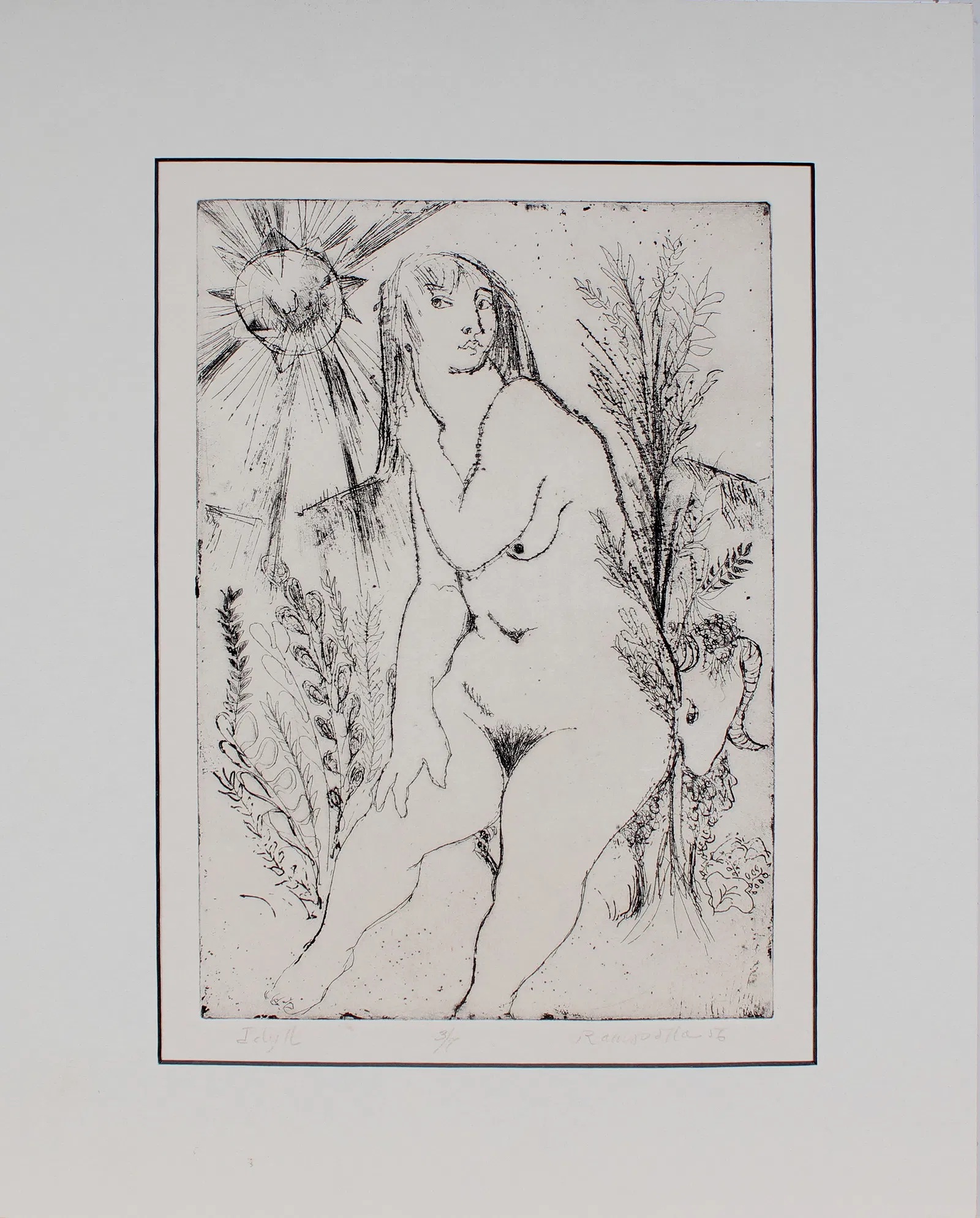
Signed Nude Woman Portrait Vintage American School Modernist Etching Print
- Quiet Morning on the Water: Mid-Century Lombardy & The Poetic Realism of Lamberto Lamberti
- A Quiet Moment in the Courtyard
- Funeral Procession in Tunisia, Jean Degeilh
- A Summer Afternoon
- Roses & the Gilded Urn
- The Quiet Collector
- Two Sides of a Story
- Reclining Woman, 1952
- Signed Nude Woman Portrait Vintage American School Modernist Etching Print
bottom of page